The High Cost of Style: Why Fashion’s Climate Pledges are Unraveling

Published at: March 25, 2026
By: shay
As a new report reveals a 4% surge in industry emissions, the gap between corporate sustainability marketing and environmental reality is becoming a chasm. The shimmering runways of Paris and Milan have long masked a gritty reality lurking within the global supply chain. Despite a decade of high-profile ‘green’ initiatives and celebrity-backed sustainability campaigns, the […]

As a new report reveals a 4% surge in industry emissions, the gap between corporate sustainability marketing and environmental reality is becoming a chasm.

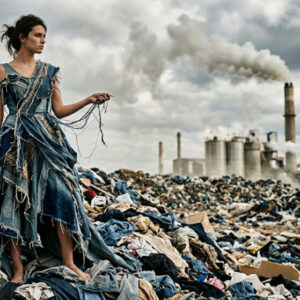
The shimmering runways of Paris and Milan have long masked a gritty reality lurking within the global supply chain. Despite a decade of high-profile 'green' initiatives and celebrity-backed sustainability campaigns, the garment industry is failing its most critical test yet: the race to net-zero. According to the latest data analyzed by Reuters, carbon emissions across the global apparel sector have climbed by 4% over the past year—a staggering reversal for an industry that has spent millions rebranding itself as eco-conscious. This uptick isn't just a statistical blip; it is a siren song for an industry that continues to prioritize volume and speed over planetary health. While heavyweights like H&M and Inditex have signed onto the UN Fashion Industry Charter for Climate Action, the disconnect between boardroom rhetoric and the smoke billowing from coal-fired textile mills in Southeast Asia has never been more apparent. The primary driver of this emissions spike remains the industry’s addiction to synthetic fibers and the frantic pace of 'ultra-fast fashion.' Polyester, a petroleum-based product, now accounts for more than half of all global fiber production. Its manufacturing process is energy-intensive, and as brands push for lower price points, they lean heavily on factories in regions where the energy grid is still dominated by fossil fuels. Experts argue that even if a brand uses 'recycled' polyester, the carbon footprint of shipping, dyeing, and distributing millions of low-cost items globally negates many of the supposed gains. Dr. Elena Vassallo, a leading researcher in circular economics, suggests that the problem lies in the structural nature of voluntary commitments. 'The industry is attempting to solve a systemic crisis with elective participation,' Vassallo notes. 'When sustainability is a choice rather than a legal requirement, it will always be the first casualty of a quarterly earnings report.' The data supports this skepticism: while some premium brands have successfully reduced their direct footprints, the 'Scope 3' emissions—those generated by third-party suppliers and garment workers—continue to swell. These upstream emissions account for roughly 70% of a garment’s total climate impact, yet they remain the most difficult to regulate and track. Furthermore, the culture of overproduction remains the elephant in the dressing room. Even as brands invest in water-saving technologies or organic cotton, the sheer volume of clothing produced annually continues to grow. We are currently producing over 100 billion garments per year, much of which ends up in landfills within twelve months of purchase. This 'volume-based' business model is fundamentally incompatible with the Paris Agreement’s goal of limiting global warming to 1.5 degrees Celsius. Without a radical shift toward garment longevity and resale, marginal gains in fabric efficiency will continue to be swallowed by the tide of consumption. The tide, however, may be turning—not through corporate benevolence, but through the iron hand of legislation. In the European Union, the proposed Ecodesign for Sustainable Products Regulation (ESPR) aims to hold brands accountable for the entire lifecycle of their products. Similarly, the New York Fashion Act seeks to mandate that any large retailer operating in the state map at least 50% of its supply chain. These regulatory frameworks represent the shift from 'naming and shaming' to 'regulating and refining.' Industry insiders suggest that until there is a financial penalty for carbon overruns, the needle will likely remain stagnant. To reverse this 4% trend, the industry must look beyond the marketing department. It requires a massive capital injection into the 'middle' of the supply chain: the wet processing units and spinning mills that currently lack the funds to transition to renewable energy. Some visionary brands are beginning to offer low-interest loans to their suppliers to facilitate this transition, recognizing that their climate targets are inextricably linked to the survival of their manufacturing partners. It is a slow, expensive, and unglamorous process, but it is the only path forward that doesn't involve a dead end for the planet. The recent 4% increase in apparel emissions proves that voluntary corporate pledges are no match for the industry's growth-at-all-costs mindset. True progress will require a shift from empty marketing to hard-line regulation and deep investment in supply chain decarbonization.